As you prepare to regenerate for the next school year, Ask a Tech Teacher contributor, Jenny Wise, has some ideas on strengthening your school community with collaborative projects. Jenny is a homeschooling mom of four children, including her youngest daughter, Anna, who is on the autism spectrum. She and her husband
chose to begin home-educating when their oldest was just four years old, embarking on a journey filled with both challenges and meaningful rewards. Along the way, Jenny has navigated the complexities of raising a growing family, supporting her children through life’s difficulties—including the recent loss of her father—and finding strength through faith, resilience, and connection. Through her platform, Special Home Educator, Jenny shares her family’s homeschooling
experiences, offering practical advice, encouragement, and resources for parents considering or navigating homeschooling, especially those raising children with special needs. Her mission is to support and inspire other families by honestly sharing the ups and downs of creating a personalized education at home." Read
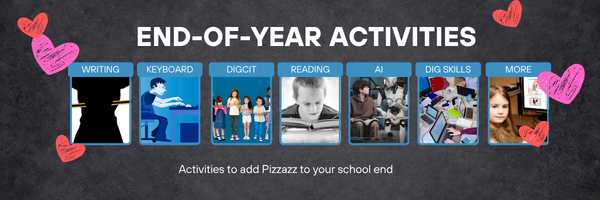
on The end of the school year is a time when both students and teachers alike are distracted by thoughts of vacation, sleeping in, and no deadlines. For many, this means the last few weeks of school, learning limps to a grinding halt, but increasingly, teachers use this time to introduce
curricular- and standards-aligned activities that "color outside the lines" -- step away from the textbook to blend learning with dynamic activities that remind students why they want to be life-long learners. Many of these, educators would love to teach but "just don't have time for", even though they align well with broad goals of preparing students for college and career. If you're looking for meaningful lessons to wrap up your school year,
here are my top picks: - Digital Passport
- Cool book reports
- Practice keyboarding
- Dig into cyberbullying
- Applied Digital Skills
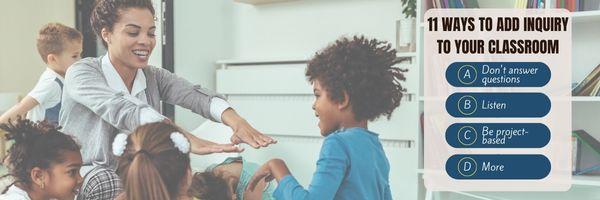
Click for the answer Tips for the Inquiry-based TeacherSo how do you create the inquiry-based classroom? Here's advice from a few of my e-friend teachers: - Ask open-ended questions and be open-minded about conclusions.
Avoid ‘yes’ and ‘no’ questions.
- Provide hands-on experiences. Instead of a how-to lecture, let students explore and ask questions to help them reach a goal they’re excited about.
- Use groups to foster learning. These can be physical classroom groups or virtual ones created with Google Hangouts or by sharing Google documents with classmates.
- Encourage self-paced learning. Be open to the student who learns less but deeper as
much as the student who learns a wider breadth. Make it easy to spiral back to review topics already covered as well as forward to find out more on a fascinating topic (even if it is typically not available at the student’s grade level).
- Differentiate instruction. Everyone learns in their own way. Conventional wisdom is that the majority learns a ‘certain’ way, but that leaves out a large number of students. Find out their best way and integrate that into your teaching.
Click for more If you're looking for a science background (everyone gets a BS), the US Naval Academy where everyone gets a BS is one of your best choices. Besides that, it includes a massive work load that must be done in a short amount of time (while holding down a part-time job--yes, you're paid for the labor), the
requirement to incorporate physical with mental calisthenics, a patriot's approach to serving your countrypeople. The result often is a successful national leader. Specifically: Read on |
|